Classes & workshops

Train a process you can return to.

Choose a pathway by experience and training goal. Every program is practice-led, text-aware, and designed around repeated work rather than passive observation.

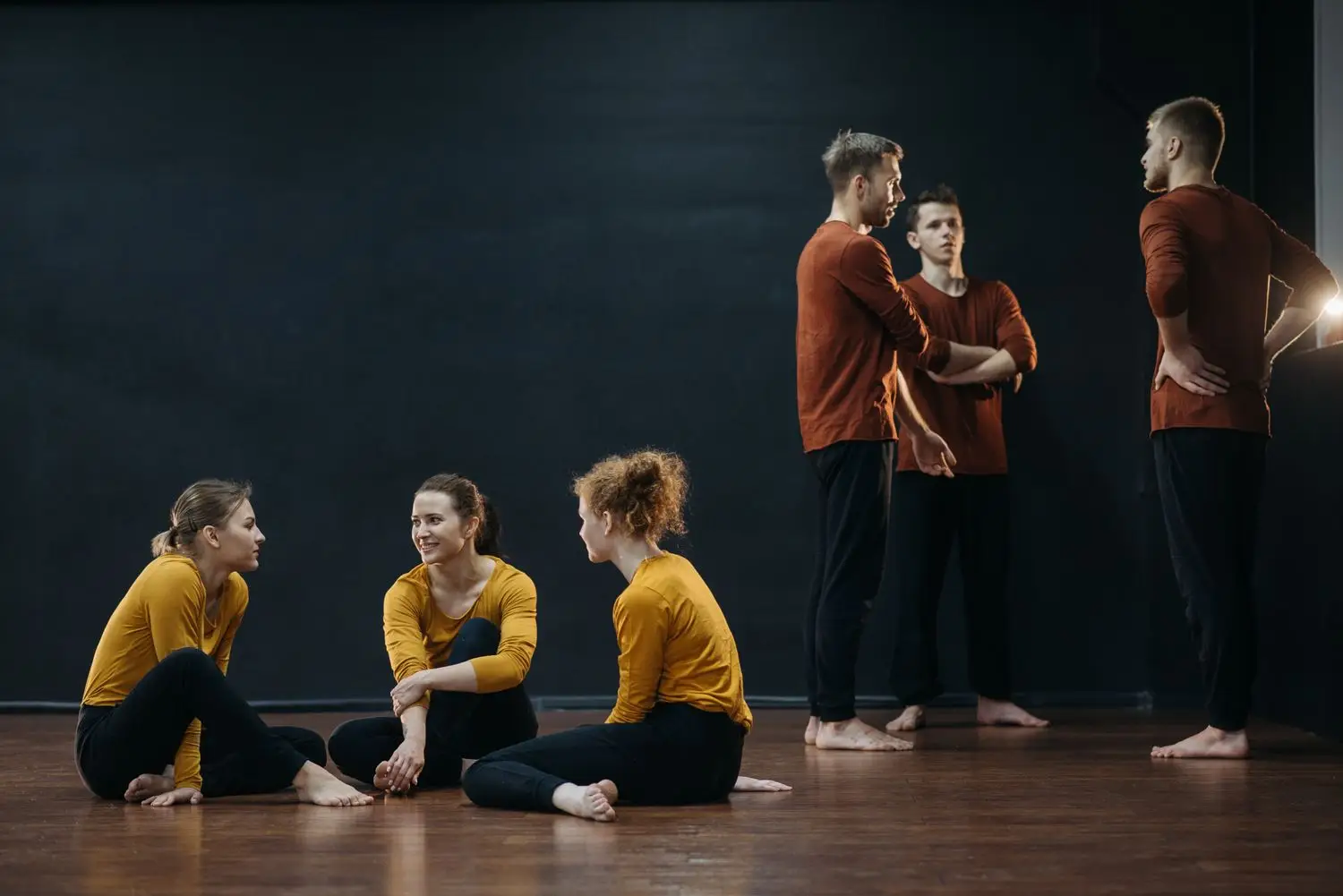
Group of actors working together in a rehearsal studio
Beginner friendly8-week format

Acting Foundations

A structured introduction to the actor’s basic tasks: entering specific circumstances, pursuing an objective, listening, changing tactics, working with a partner, and using text as action rather than recitation.

  • Attention and partner awareness
  • Objective, obstacle, action, and stakes
  • Simple beat and shift analysis
  • Short scripted scenes and structured improvisation
  • Receiving and applying rehearsal notes
LevelNew and returning actorsFocusReliable fundamentals
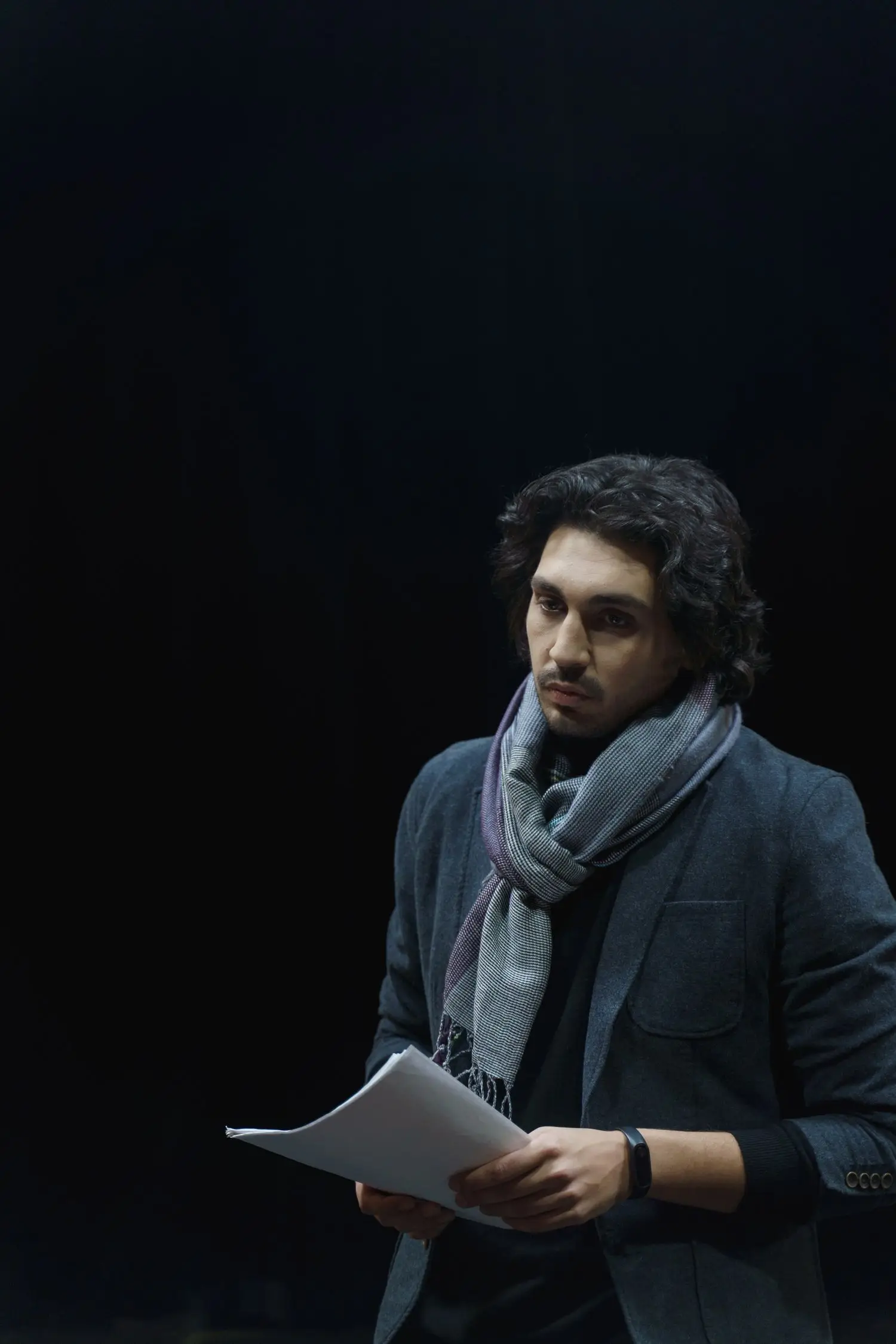
Actor holding a script during rehearsal
IntermediateOngoing studio

Scene Study

Longer-form rehearsal for actors who already understand basic scene structure and want to deepen text analysis, relationship work, timing, and the ability to sustain clear action across a full scene.

  • Close reading and given circumstances
  • Beat structure and changing tactics
  • Relationship and status shifts
  • Physical life and use of space
  • Repeated runs after targeted notes
LevelIntermediate / advancedFocusDetailed scene work
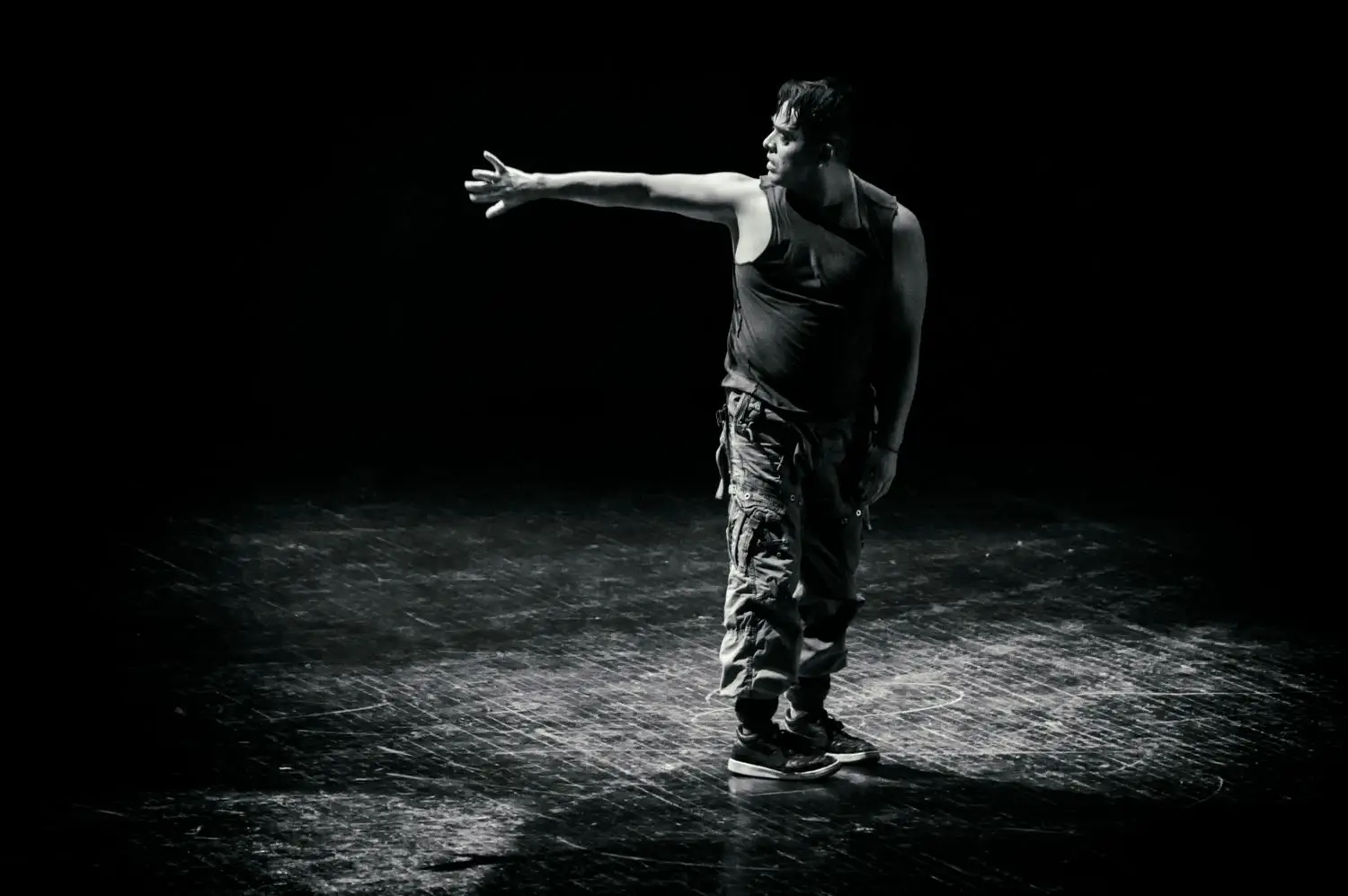
Performer practicing movement under a spotlight
All levelsTechnique intensive

Voice & Movement

Training for physical and vocal availability. Work connects breath, articulation, rhythm, space, gesture, and impulse so the performer can support demanding text without separating voice from action.

  • Breath and grounded support
  • Articulation and clarity
  • Rhythm, tempo, and spatial awareness
  • Physical impulse and gesture
  • Applying voice and movement to scenes
LevelAll experience levelsFocusEmbodied performance
Actor portrait prepared for an audition exercise
Focused workshopPractical format

Audition Lab

A pressure-aware workshop for building decisive, adjustable audition choices. Actors practice first reads, limited preparation, contrasting interpretations, direction changes, and concise self-evaluation after each attempt.

  • Fast script breakdown
  • Choosing a playable point of view
  • Working within time limits
  • Taking direction without losing structure
  • Preparing a repeatable pre-audition process
LevelActors with basic trainingFocusClarity under pressure
What to expect

Training is active, not observational.

Students should expect to rehearse, watch carefully, take notes on process, and return to material after feedback. Even when another pair is working, the room is learning how choices alter timing, focus, and story.

Prepare

Arrive with the text worked on.

Preparation gives the class something concrete to test; it is not meant to lock the actor into a fixed performance.

Attempt

Commit to a specific choice.

A clear attempt produces useful information. Vague choices are harder to refine because nothing definite has been risked.

Adjust

Use the note and run again.

The second attempt is where training becomes visible: change one thing, observe the effect, and keep refining.

Placement guidance

Not sure where to start?

New actors usually begin with Foundations. Actors with previous training can contact the studio with a brief description of experience, current goals, and recent scene or production work. We use that information to suggest the most suitable starting point.

Do I need prior stage experience?

No for Acting Foundations. Scene Study and Audition Lab work best when you already understand basic objectives, actions, and partner work.

Will I work on prepared scenes?

Yes. Depending on the program, you may receive assigned material, work on instructor-selected scenes, or bring approved material that serves the current training focus.

How large are classes?

Most studio groups are intentionally kept small enough for repeated practical work. Exact group size varies by program and term.

What should I bring?

Bring the assigned text, a notebook, comfortable rehearsal clothing, and any specific preparation requested for the session.

Between sessions

Class time works better when rehearsal continues outside class.

Preparation does not mean manufacturing a finished performance. It means arriving with enough knowledge of the text and circumstances that class time can be spent testing choices rather than recovering basic information.

Read

Know the event of the scene.

Track what has just happened, what each person wants now, what information changes the balance, and what remains unresolved at the end. Mark questions instead of inventing certainty where the text does not provide it.

Rehearse

Work actions, not a fixed delivery.

Try multiple ways of pursuing the same objective. Notice where physical behaviour becomes repetitive or where a line has acquired a predetermined melody that prevents fresh listening.

Record

Leave with the next task written down.

After class, translate broad observations into specific rehearsal tasks. “Be stronger” is vague; “hold the objective through the pause and stay connected to the partner’s response” can actually be practiced.

How the pathways connect

Each program solves a different rehearsal problem.

The classes are not ranked as “easy” and “advanced” versions of the same experience. They emphasize different parts of the actor’s process, and many students move between them as their training goals change.

Foundations

Build the basic sequence of preparation, action, listening, and adjustment.

This is the clearest starting point for actors who want a dependable vocabulary for objectives, obstacles, tactics, beats, circumstances, partner work, and rehearsal notes. The focus is learning how to work rather than trying to appear polished.

Scene Study

Sustain craft across longer and more complex material.

Once the basic process is familiar, longer scenes expose new problems: maintaining an objective through multiple shifts, tracking relationship changes, carrying subtext without forcing it, and staying responsive after many repetitions.

Voice & Movement

Expand the physical and vocal choices available to the actor.

This work is useful when breath, articulation, habitual tension, limited gesture, or restricted spatial behaviour interferes with the scene. The body and voice are trained as part of dramatic action, not as separate display skills.

Audition Lab

Make clear choices when preparation time is limited.

Audition work compresses the process. Actors practice identifying the event quickly, choosing a point of view, making readable adjustments after direction, and preserving partner awareness even when pressure encourages a fixed performance.

What meaningful progress looks like

Improvement is more specific than “feeling more confident.”

Confidence can be a by-product of training, but it is difficult to rehearse directly. We look instead for concrete changes in how an actor prepares, receives information, uses text, applies notes, and maintains repeatable stage behaviour.

Clarity

You can explain what you are doing in playable terms.

The actor can identify the scene event, objective, obstacle, action, and major shifts without overloading the work with abstract psychology. This makes preparation faster and notes easier to apply.

Flexibility

A new note changes the scene without destroying your preparation.

Training becomes visible when an actor can alter pace, tactic, emphasis, or physical relationship while keeping the text and circumstances secure. Adjustment becomes part of the process rather than a threat to it.

Reliability

Useful choices remain available on the next run.

A strong rehearsal process produces work that can be repeated, refined, and communicated to an ensemble. Consistency is not sameness; it is enough structural control to let responsive acting happen again.

Work in the room

Build a practice that can hold up under rehearsal pressure.

Explore the current training pathways or contact the studio to discuss level, goals, and placement.